THE BEAUTY BIBLE · TREATMENT COMPARISON
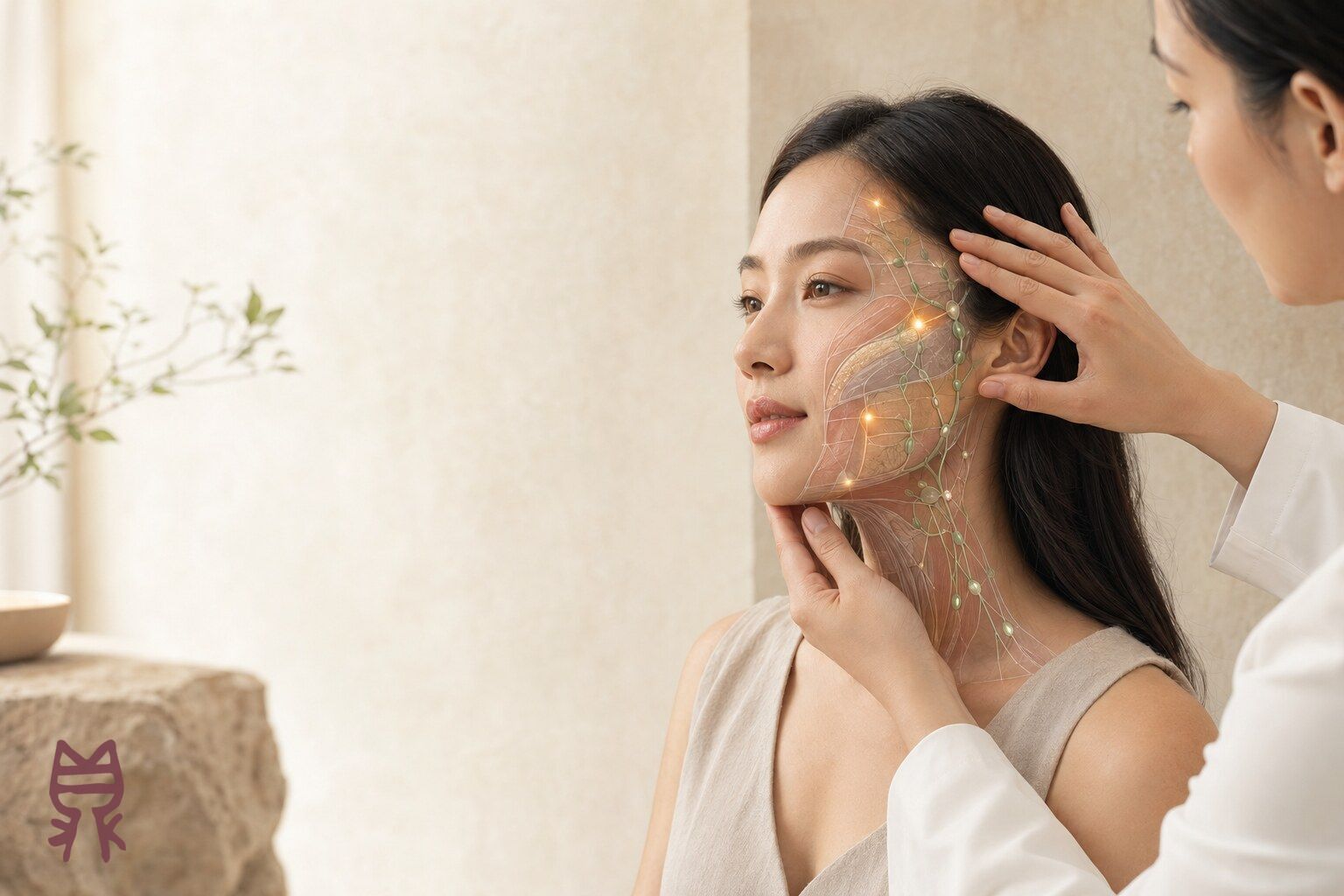
Facial acupuncture and Botox are not interchangeable. One uses individualized acupuncture to address selected tension and circulation patterns; the other uses botulinum toxin to reduce contraction in specific muscles. The right choice begins with understanding why the face is moving as it does.
How do facial acupuncture and Botox differ?
| Facial acupuncture | Botox / botulinum toxin | |
|---|---|---|
| Mechanism | Fine-needle stimulation planned around selected tension, circulation and whole-face patterns | Temporarily reduces nerve signaling to selected muscles |
| Expression | Aims to work with existing movement | Reduces targeted contraction |
| Onset | Response varies and may be gradual | Usually develops over days |
| Best suited to | People seeking a natural, whole-face assessment | Selected dynamic lines or muscle bulk |
| Limit | Cannot reproduce neuromodulator paralysis | Does not directly correct every structural or volume concern |
What does Botox do well?
Botulinum toxin is particularly effective for selected dynamic lines caused by repeated muscle contraction, including some forehead, glabellar and lateral eye lines. It may also reduce masseter bulk in appropriate candidates. Dose, placement and facial balance are critical.
How may facial acupuncture fit?
Facial acupuncture may be considered when a person values preserved expression and wants tension, puffiness, jaw clenching, scalp or neck load and whole-face balance assessed together. It does not “detox” Botox, dissolve it or reliably create the same reduction in movement.
Crow’s feet: movement or whole-eye tension?
Botox can reduce lateral orbicularis oculi contraction and soften dynamic crow’s feet. Yet squinting, dry eyes, brow compensation, temple tension and sun exposure may continue to shape the eye area. A complete assessment should not treat every eye line as the same problem.
Glabellar and forehead lines
Reducing contraction may soften frown and forehead lines, but the forehead also helps compensate for brow position. Excessive weakening in an unsuitable pattern can feel heavy or change expression. Facial acupuncture takes a different route by evaluating scalp, brow and facial tension without intentionally blocking nerve-to-muscle signaling.
Masseter treatment and the jawline
A large masseter may reflect true muscle bulk, clenching, bite or compensation. Botox can reduce muscle volume over time; acupuncture may be used for selected tension patterns but does not predictably shrink the muscle to the same degree. A narrower masseter is not always a cleaner jawline if midface support or lower-face laxity is also present.
Safety, skin and recovery
Both treatments require qualified medical judgment. Botox risks include bruising, asymmetry, unwanted weakness, eyelid or brow changes and other adverse effects. Facial acupuncture may cause temporary soreness, pinpoint bleeding or bruising. Pregnancy, medication, illness and recent procedures need review.
Some studies have observed reduced sebum in botulinum-toxin-treated skin. The clinical significance varies by dose, site and person; it should not be simplified into a claim that Botox inevitably causes rebound wrinkles.
Can the two treatments be combined?
They may be used in the same long-term plan, but not automatically on the same day or area. Timing depends on injection sites, dose, bruising, swelling and the purpose of acupuncture. Always tell the clinician exactly what was performed and when.
Which should I choose?
Choose Botox when a controlled reduction in selected muscle activity is the central goal. Consider facial acupuncture when you want a more gradual approach centered on tension, circulation, expression and whole-face assessment. Some people may appropriately choose both at different times.
Continue reading
Begin with an individual assessment
Every face has a different structure, treatment history and health context. A considered plan begins with understanding yours.
BOOK A CONSULTATIONMedical notice: This article is for health education only. It does not provide a diagnosis or replace individualized medical care. Results and appropriate treatment plans vary by person.