THE BEAUTY BIBLE · FACIAL CONCERNS
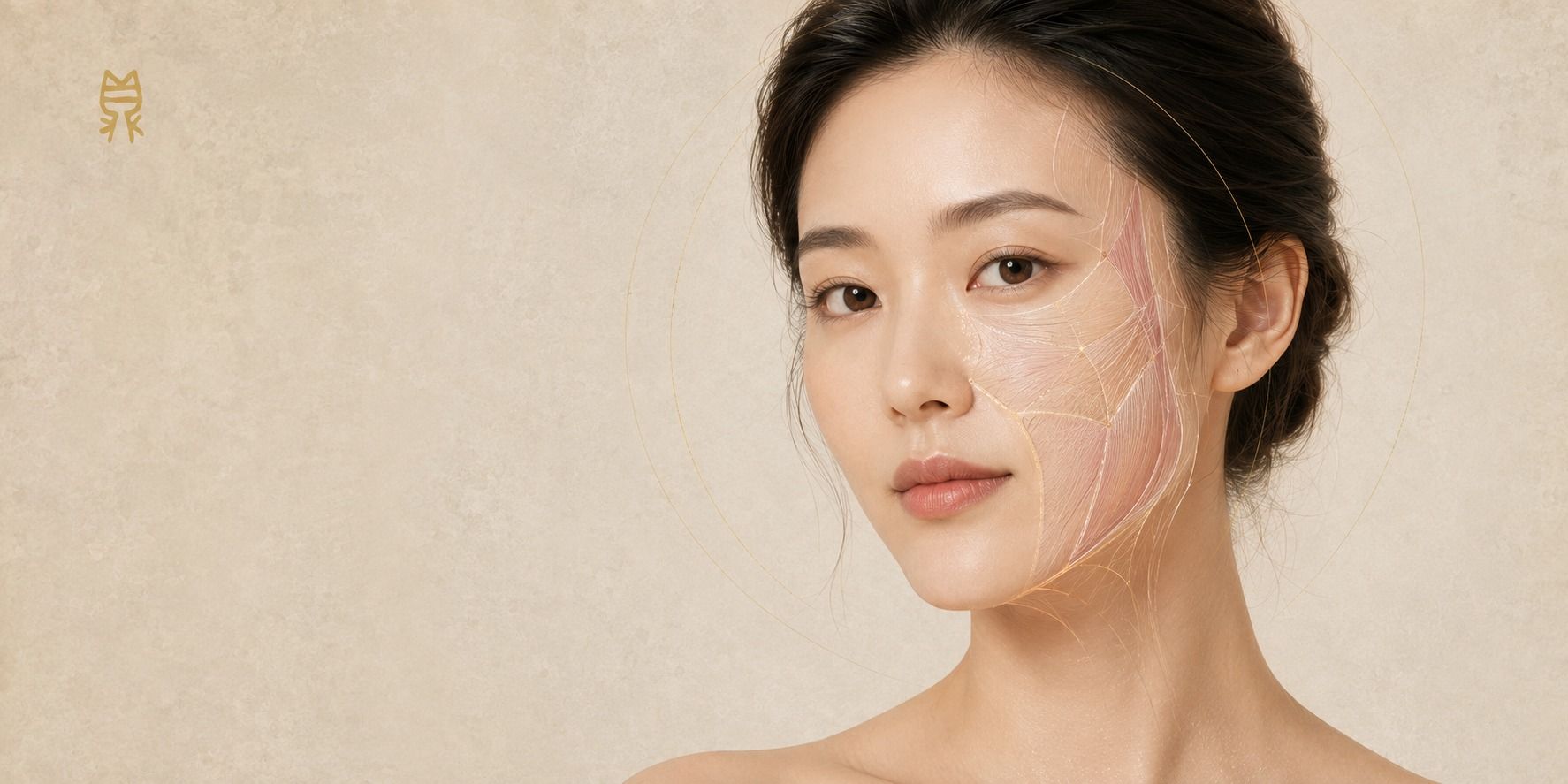
Facial sagging is not a single-layer problem. Skin, fascia, muscle, fat, ligaments and bone change at different speeds, while sleep, posture, swelling and habitual tension can make the face look suddenly heavier or more tired.
What are the early signs of facial sagging?
Changes may first appear as a lower brow, flatter midface, deeper nasolabial or marionette folds, softer jawline, downward mouth corners, jowls or a heavier under-chin area. These signs do not all share one cause, so treating the most visible line alone may not restore balance.
The five structural layers behind facial sagging

Why can the face look suddenly heavier or more tired?
True structural aging is gradual, but its appearance can fluctuate. Poor sleep, high sodium intake, alcohol, allergy, menstrual changes, stress, jaw clenching and neck tension may increase swelling or downward pull. This is why the same face can look markedly different from one week to another.
How muscle and fascia influence support
Muscles do not simply become “weak.” Some regions may overwork while others contribute less effectively. Fascia transmits force between the scalp, temples, face, jaw and neck. When glide is restricted or tension becomes one-sided, the visual result may be heaviness, asymmetry or a downward expression.
Why is one side often more sagged?
Facial asymmetry may relate to skeletal structure, bite, chewing preference, clenching, sleeping position, habitual expression, posture or previous procedures. Sudden new asymmetry, weakness, numbness or speech change requires urgent medical assessment.
How Chinese medicine understands the whole picture
Chinese medicine adds a whole-body lens: sleep, digestion, stress, menstrual health, fluid balance and recovery can affect tone, color and swelling. This perspective does not replace anatomical assessment; at Dingyan it is integrated with it.
How should treatment options be compared?
| Approach | Primary mechanism | Important boundary |
|---|---|---|
| Facial acupuncture | Individualized needling for selected tension and circulation patterns | Gradual and variable; cannot replace structural volume or surgery |
| Neuromodulator | Reduces selected muscle contraction | May alter expression or muscle balance |
| Filler | Adds volume or support | Placement, swelling and accumulation matter |
| Energy device | Delivers controlled energy to selected tissue depths | Depth, heat and recovery differ by device |
| Surgery | Repositions or removes tissue | Greater change with surgical risk and recovery |
Frequently asked questions
Can facial acupuncture lift the face?
It may support selected tension, puffiness and contour concerns, but “lifting” is not one guaranteed outcome. The likely benefit depends on which layers are contributing.
Do massage and skin care help?
They may support comfort, hydration and temporary fluid movement. They cannot reverse every structural change, and aggressive self-massage may worsen irritation or swelling.
When should I seek medical care?
Seek prompt assessment for sudden facial droop, weakness, numbness, severe headache, visual symptoms, new swelling or other neurological change.
Continue reading
Begin with an individual assessment
Every face has a different structure, treatment history and health context. A considered plan begins with understanding yours.
BOOK A CONSULTATIONMedical notice: This article is for health education only. It does not provide a diagnosis or replace individualized medical care. Results and appropriate treatment plans vary by person.