THE BEAUTY BIBLE · TMJ / TMD
When your jaw carries the tension first
Jaw pain, clenching, grinding and difficulty opening the mouth are not always isolated joint problems. The masseter, temples, sleep, stress, neck and shoulder tension often participate together.
Quick answer
Temporomandibular disorders (TMD) are a group of conditions affecting the jaw joints, chewing muscles and jaw movement. Common signs include pain in front of the ear or in the masseter, limited opening, jaw locking, painful clicking, and pain spreading to the temples, face or neck. Joint sounds without pain or restricted movement are common and do not automatically require treatment. Recurrent pain, difficulty eating or disrupted sleep should be assessed by a dentist, oral and maxillofacial specialist or another qualified professional.
You may think you are simply tolerating stress, but the jaw can be the first place where fatigue becomes visible.
Why can cold weather make jaw tension more noticeable?
When the weather turns colder, day-to-night temperatures fluctuate, or people move repeatedly between strong air-conditioning and outdoor heat, those who already clench, grind or carry neck tension may notice more jaw stiffness, masseter soreness and temple tightness.
Research does not support the simplistic claim that winter directly causes TMD. However, population data suggest that temperature changes may be associated with patterns of TMD-related healthcare visits. Cold can also prompt protective muscle contraction and make an already sensitive tooth, chewing muscle or joint feel more uncomfortable.
Traditional Chinese medicine describes this tendency as “cold causes contraction” (寒主收引). This is a clinical framework for understanding how cold may increase a person’s sense of tightness; it is not proof that cold drinks or cold weather cause every case of TMD. If symptoms repeatedly worsen after iced drinks or cold exposure, reduce the trigger, keep the jaw and neck warm, and notice whether the upper and lower teeth remain in contact when you are not eating.
TMJ and TMD: what is the difference?
TMJ means the temporomandibular joint itself. TMD means temporomandibular disorders—a group of problems involving the joint, chewing muscles and related structures. People often say “I have TMJ,” but the more precise statement is that they have jaw-joint symptoms or may have a TMD.
TMD is not one single disease. Pain may arise mainly from muscle overload, an internal joint problem, dental injury, trauma, sleep-related bruxism, sensitisation of the pain system, or several factors at once.
Common symptoms worth noticing
• Pain or tenderness in front of the ear, masseter, temples or jawline.
• Difficulty opening fully, deviation during opening, or a jaw that catches or locks.
• Clicking, popping or grinding accompanied by pain or limited movement.
• Morning jaw fatigue, tooth wear, cheek biting or headaches that may suggest clenching or bruxism.
• Ear fullness, facial pain, neck tension or sleep disturbance occurring alongside jaw symptoms.
A clicking sound alone, without pain or limitation, is common. It should not be treated as proof that the joint is damaged or that the bite must be permanently altered.
No grinding sound does not mean the muscles are resting
Bruxism is not only audible tooth grinding. Some people mainly clench for long periods. Others keep the teeth lightly touching while concentrating, driving, exercising or scrolling on a phone. When the jaw has no true rest position, the masseter and temporalis may work for hours without obvious noise.
At rest, the lips may touch gently while the teeth remain slightly apart. Persistent morning soreness, tooth wear, fractured restorations or changes in the bite should be discussed with a dentist.
Why can a tense jaw make the face look different?
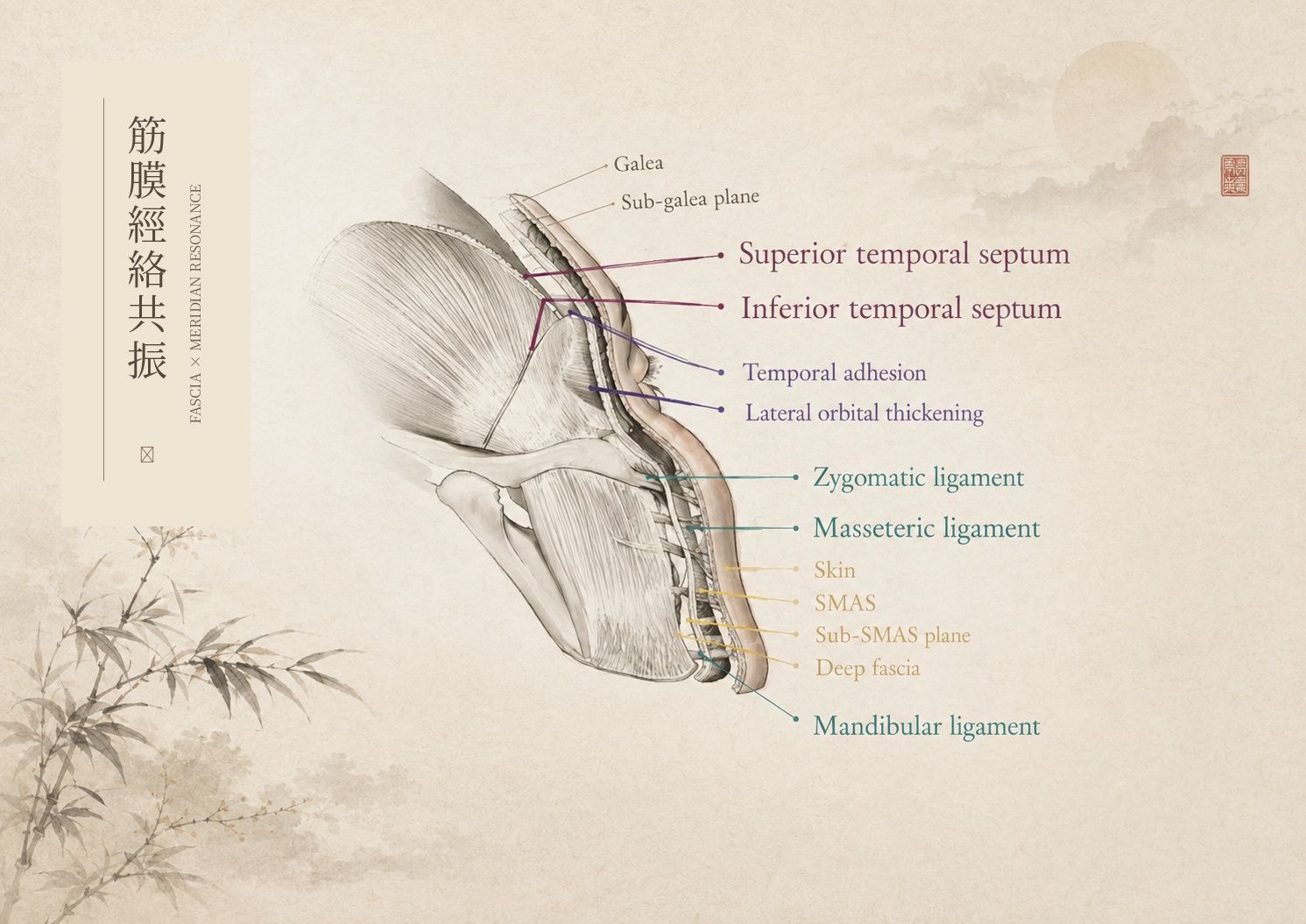
The lower face is shaped by bone, dental bite, muscle volume, soft tissue, fluid distribution and posture. Long-standing asymmetric chewing or clenching can create different workloads on the two sides. Facial expression may look less even, the jawline may feel heavier, and the temples or neck may tighten in compensation.
However, a “large masseter” cannot be diagnosed by appearance alone. Bone width, fat distribution, swelling and habitual posture may create a similar visual effect. Aesthetic assessment should not replace evaluation of pain, locking, sudden bite change or dental damage.
First-line self-care: gentle, reversible and observable
• During a painful period, choose softer foods temporarily and avoid forcing the mouth wide open.
• Reduce gum chewing, nail biting, pen biting and repeated chewing of very hard foods.
• Use brief heat or cold through a protective cloth according to comfort; stop if symptoms worsen.
• Track sleep, stress, daytime tooth contact and the situations in which clenching occurs.
• Avoid repeatedly making the joint click or forcefully stretching it yourself.
Many TMD care plans begin with conservative, reversible approaches. Whether a splint, physical therapy, medication or another intervention is appropriate depends on the diagnosis.
When should you seek further medical or dental assessment?
• The mouth opening is clearly restricted, the jaw repeatedly locks, or eating and drinking are affected.
• Pain persists, repeatedly returns or significantly disrupts sleep and daily life.
• A new bite change, swelling, bleeding or abnormal movement follows trauma.
• Fever, marked redness or swelling raises concern for infection.
• A severe or unusual headache occurs with visual, neurological or other systemic symptoms.
Assessment may begin with a dentist, oral and maxillofacial specialist, TMD clinic or pain professional. Ear, sleep or neurological symptoms may require coordinated care.
How facial acupuncture may support muscle-based jaw tension
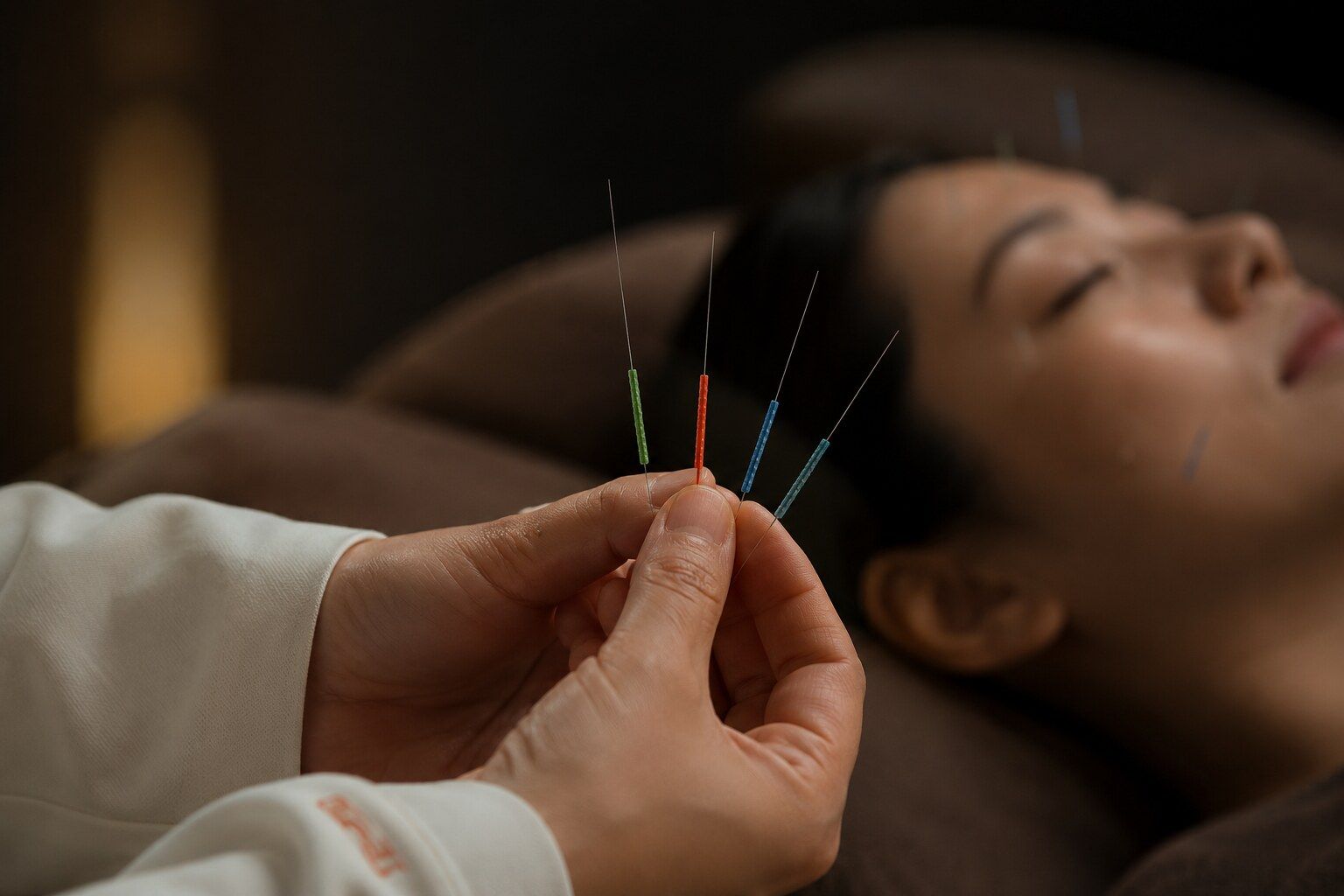
Facial acupuncture at Dingyan is not limited to the appearance of the jawline. The masseter, temporalis, scalp, suboccipital region and neck are assessed as a connected tension chain. For people whose symptoms are mainly related to chewing-muscle tightness, repeated clenching or myofascial pain, acupuncture may be considered as part of conservative care to support pain modulation, muscle coordination and comfortable movement.
Current research suggests possible benefits for TMD pain and mouth-opening function, but study quality and long-term evidence remain limited. Facial acupuncture is therefore not presented as a universal cure, and a visually slimmer face is not a substitute for diagnosis.
Why whole-body symmetry may help the jaw work with less compensation
The jaw does not function in isolation. Head rotation, neck mobility, shoulder height, rib-cage movement, breathing and habitual stance can change how head and neck muscles share work. When the body repeatedly shifts to one side, chewing, swallowing and opening may also develop compensatory patterns.
Improving body symmetry does not mean forcing the two sides to look identical. The aim is to reduce unnecessary deviation and give the head, neck, shoulder girdle and jaw a more balanced range of motion. This may support muscle-related TMD, but it cannot replace examination of the joint disc, teeth, bite, trauma or infection.
Y71 muscle relaxation: extending care between visits
Small, repeated efforts accumulate throughout the day. Y71 Magnesium Relaxation Mist may be used according to its product directions as a daily relaxation-care step for the shoulders, neck and overall muscle tension, together with awareness of clenching and posture.
Y71 is not a medicine for TMD and cannot treat disc displacement, tooth wear, sudden bite change or infection. Avoid the eyes, mucosa and broken skin. Worsening pain, limited opening or locking requires professional assessment.
Traditional Chinese medicine does not treat every pattern of clenching as the same
Some people tighten more in cold weather; others worsen after emotional stress, poor sleep, menstrual changes, exhaustion or long-standing pain. Dingyan considers the opening pathway, left-right expression patterns, head-neck tension, body symmetry, sleep and overall condition before discussing an individual plan.
Acupuncture and relaxation care cannot replace diagnosis of dental damage, internal joint pathology, infection, trauma or neurological warning signs.
Related reading
Frequently asked questions
Does a clicking jaw always mean TMD?
No. Painless clicking without locking or restricted movement is common. Pain, difficulty opening or a sudden bite change deserves assessment.
Does bruxism always make a sound?
No. Some people grind audibly, while others mainly clench. Morning soreness, tooth wear and headaches can be useful clues.
Can stress cause TMD?
TMD is usually multifactorial. Stress may contribute to the onset or persistence of symptoms, but pain should not be dismissed as “only emotional.”
Will a night guard cure it?
Splints can be useful for selected people and purposes, but designs differ and not everyone needs one. A dentist should assess the teeth, bite and symptoms.
Can facial acupuncture shrink a large masseter?
It may support tension and discomfort when repeated clenching is important. It should not be claimed to reduce true muscle volume as quickly or predictably as botulinum toxin.
Can cold weather or iced drinks worsen symptoms?
Not for everyone. Cold and temperature shifts may increase protective muscle tightening in a sensitive jaw. Repeated personal patterns are more useful than blanket rules.
Can Y71 treat TMD?
No. It is a daily muscle-relaxation care product used according to its directions, not a treatment for joint disease.
When is relaxation alone not enough?
Seek appropriate assessment for locking, restricted opening, trauma-related bite change, infection signs, significant dental damage or severe headache with neurological or visual symptoms.
ARTICLE REVIEW|Dr. Meng-Ying Lin
Founder and Medical Director of Dingyan Taipei and author of The Beauty Bible. Her clinical work focuses on facial acupuncture, facial muscles and fascia, natural expression and whole-person aesthetic assessment.
Content updated: August 18, 2026
Clinical references
National Institute of Dental and Craniofacial Research. Temporomandibular Disorders (TMD).
NHS. Temporomandibular disorder (TMD).
NHS. Teeth grinding (bruxism).
Lee YH, et al. Climate temperature and seasonal influences on temporomandibular disorders.
Ning Z, et al. Efficacy of acupuncture in the treatment of temporomandibular disorders: a meta-analysis of randomized controlled trials.
This article provides general education about TMD, bruxism, chewing muscles and head-face tension. It is not individual diagnosis, treatment advice or a guarantee of results. Care must be based on assessment by qualified healthcare professionals.
PRIVATE CONSULTATIONBegin with an individual assessment—from the jaw and neck to whole-body tension
If jaw discomfort keeps returning, Dingyan can assess symptoms, mouth opening and overall tension. Locking, marked restriction or a sudden bite change should first receive dental or relevant professional evaluation.
CONTACT DINGYAN ON LINE|CONSULTATION & BOOKING