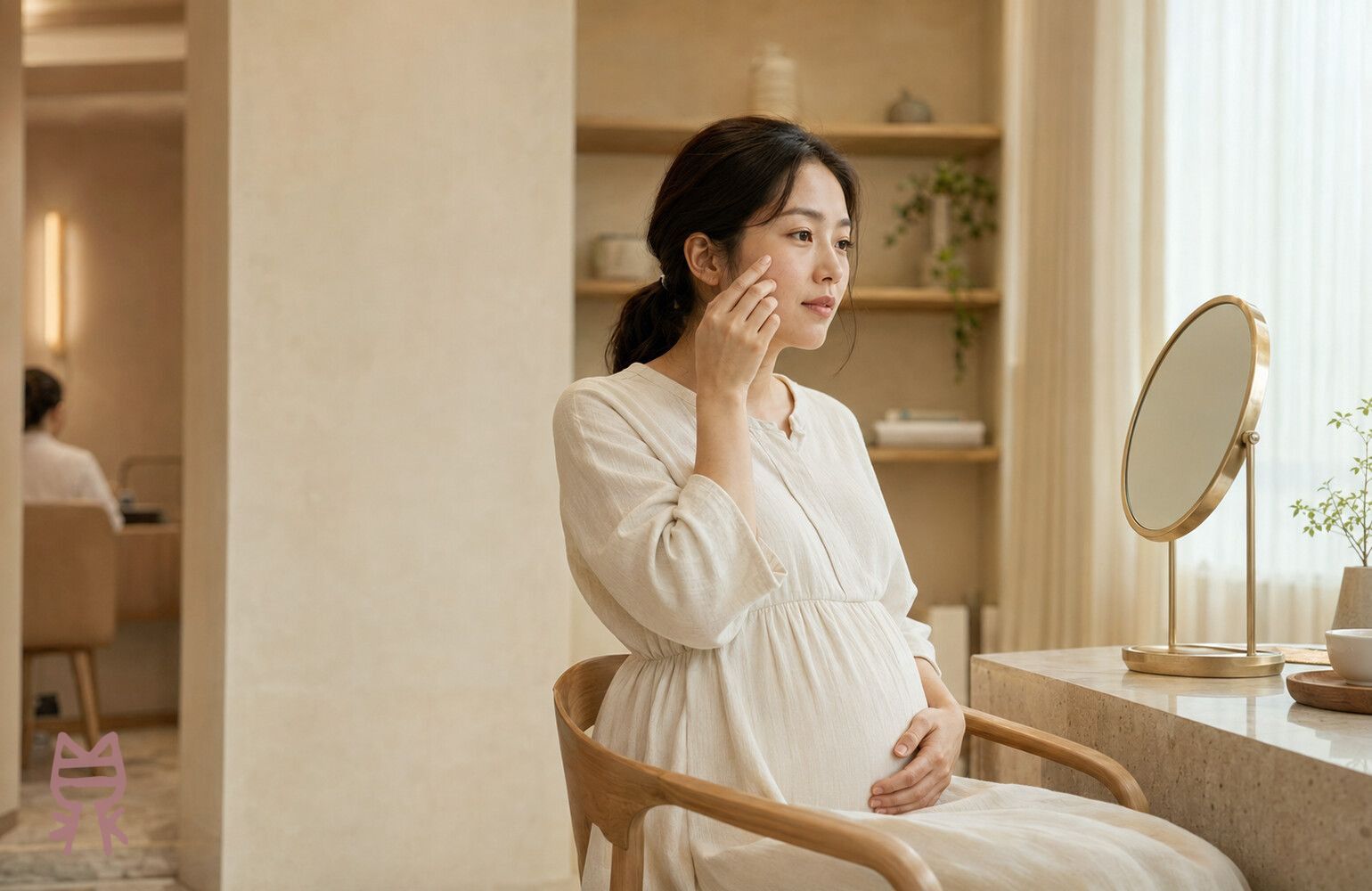
PREGNANCY & POSTPARTUM · BREASTFEEDING
Breastfeeding does not automatically rule out facial acupuncture. The more important questions are postpartum recovery, bleeding, infection, medication, milk supply, exhaustion, hydration and whether the mother is medically stable.
Begin with maternal health, not appearance
Facial acupuncture while breastfeeding should always be considered within pregnancy or postpartum health. Feeding schedules, broken sleep, neck and shoulder loading, jaw tension and nutritional demands can influence both comfort and facial appearance. These needs often matter more than an immediate cosmetic goal.
What should be assessed first?
Before treatment, we review birth recovery, feeding pattern, medication and supplements, mastitis symptoms, hydration, bleeding, dizziness, anemia risk and the ability to rest during treatment. The safest decision may be to proceed gently, modify the plan, postpone, or refer.
Why timing is individualized
Trimester, delivery history, recovery, feeding and sleep are not interchangeable milestones. A calendar alone cannot show whether tissues, circulation and the whole person are ready for elective care.
How facial appearance may change
Hormones, fluid distribution, sleep loss, anemia risk, nutrition, stress and posture can all change color, puffiness, tension and hair. These changes should not be reduced to “aging suddenly.”
How acupuncture may fit
A conservative session may support relaxation and head-neck tension while respecting feeding and recovery needs.
Needle number, positioning, session length and stimulation should be adapted rather than copied from a standard aesthetic protocol.
What treatment cannot replace
Acupuncture should not be promised to increase milk supply or replace lactation, obstetric, pediatric or medical assessment.
How to plan the next step
Bring current diagnoses, medication, prenatal or postpartum concerns and the contact details of relevant clinicians. Set a modest goal and review how the body responds before committing to a series.
Warning signs that come first
fever with a painful red breast, severe weakness, fainting, heavy bleeding, chest pain, breathing difficulty, severe headache or concern about the baby’s feeding or weight needs prompt professional care.
Contact the obstetric, postpartum, pediatric or medical team first. Reassurance should come from appropriate assessment, not from the absence of a dramatic facial sign.
Continue reading
Begin with an individual assessment
Every face has a different structure, treatment history and health context. A considered plan begins with understanding yours.
BOOK A CONSULTATIONMedical notice: This article is for health education only. It does not provide a diagnosis or replace individualized medical care. Results and appropriate treatment plans vary by person.