THE BEAUTY BIBLE · DINGYAN METHOD
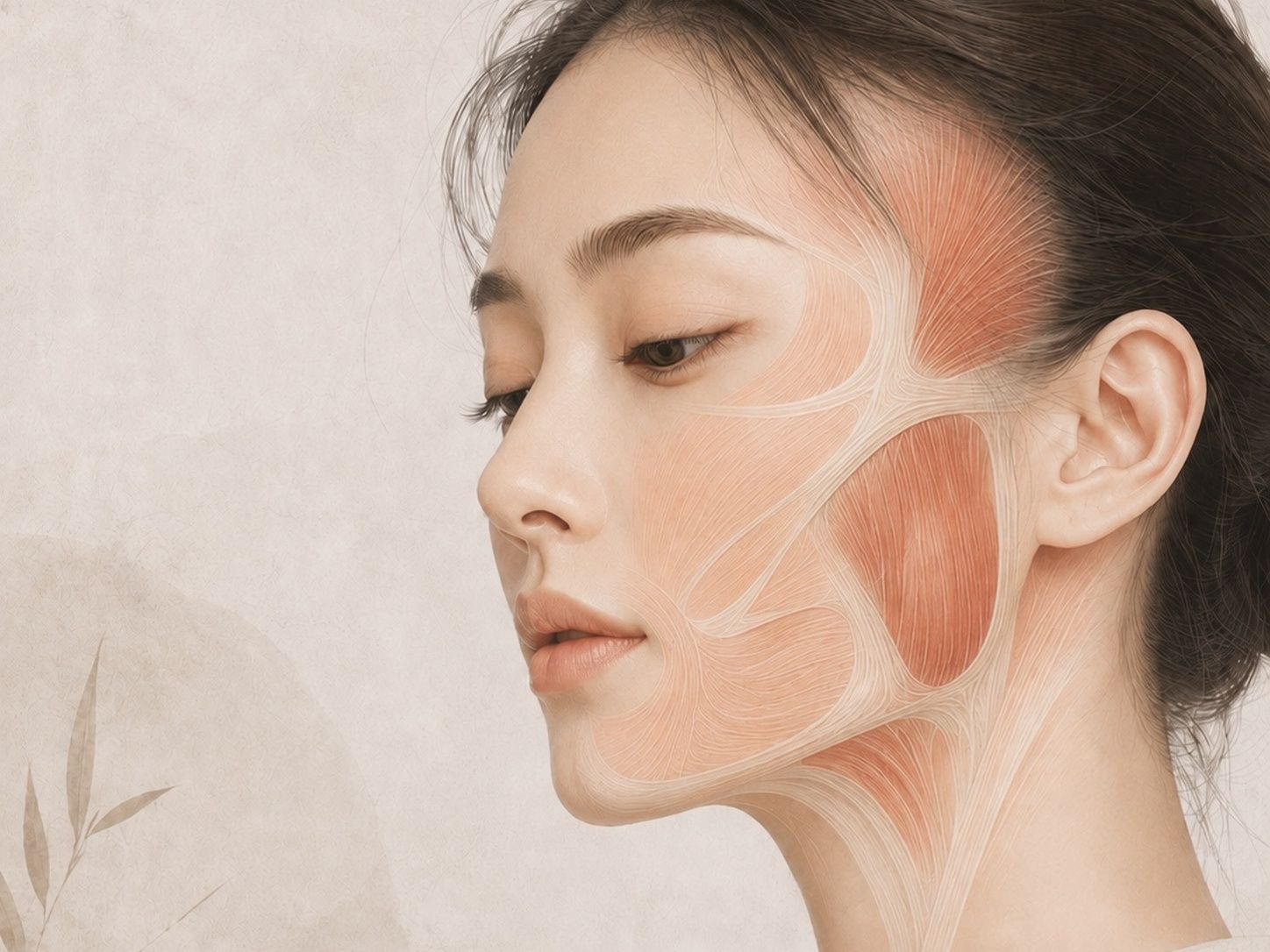
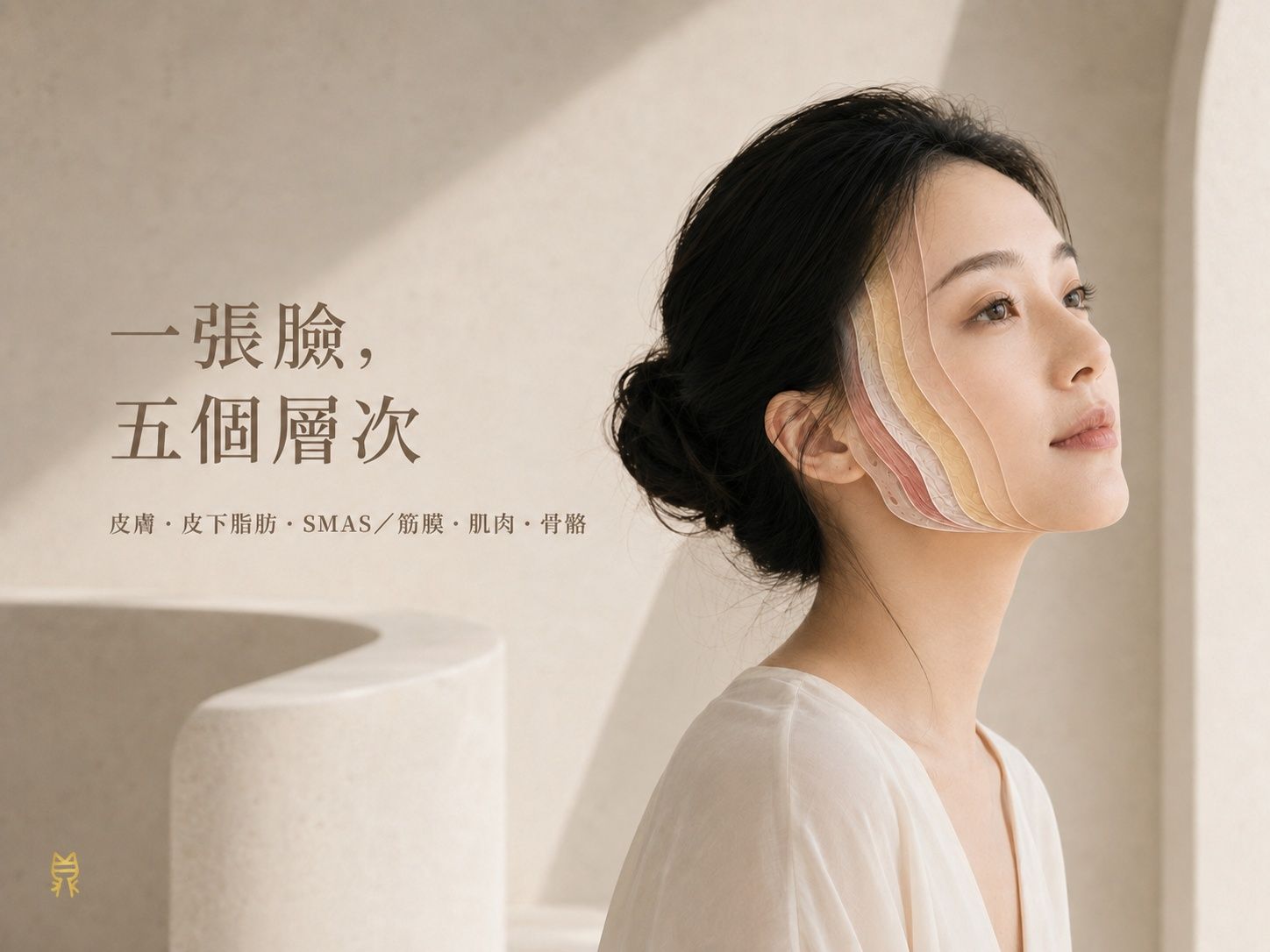
Facial expression depends on a layered system: skin, subcutaneous fat, SMAS and fascia, muscles and bone. A youthful face is not simply tight. It needs muscles and fascia that are supple, responsive and appropriately supported.
The five layers that shape the face
The appearance of a face emerges from several interacting layers: skin, subcutaneous fat, the SMAS and fascial planes, muscles and bone. Each layer changes differently with age and health. Surface treatment alone cannot explain every line, fold or shift in contour.
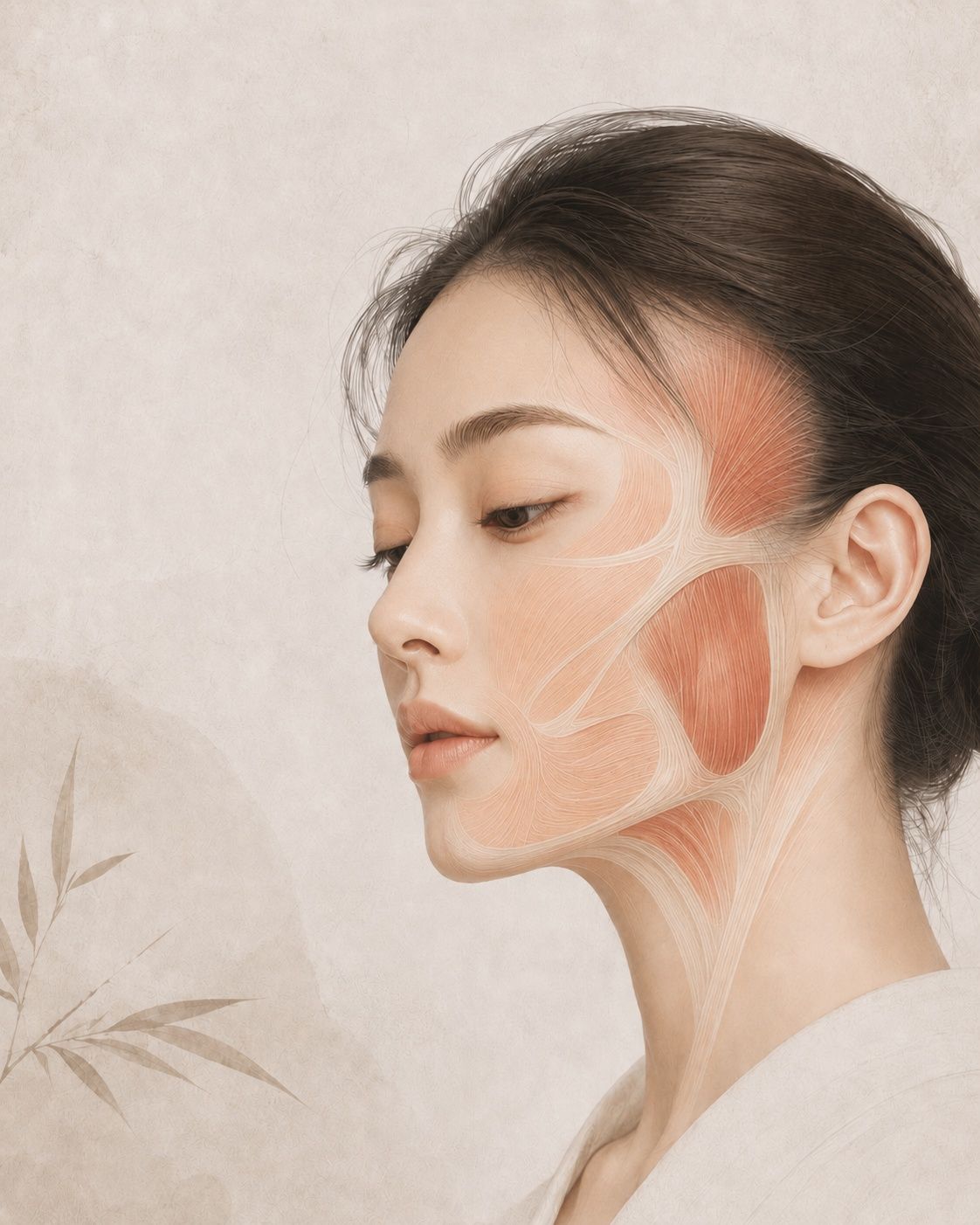
Muscle is not simply strong or weak
A muscle can be overactive, shortened, inhibited, poorly coordinated or compensating for another region. Chronic frowning, squinting or clenching can deepen tension patterns, while loss of effective support elsewhere may make the face appear tired or elongated.
Fascia transmits force between regions
Fascia connects facial movement with the scalp, temples, jaw and neck. When tissue glide is comfortable, movement is distributed smoothly. When a region is restricted, force may be concentrated elsewhere and expression can look less balanced.
Expression lines and muscular compensation
Forehead lines may be related to brow compensation; glabellar lines to repeated frowning; crow’s feet to eye-muscle activity and squinting. Treating a line without understanding the movement around it can miss the larger pattern.
From the scalp to the corners of the mouth
Tension is transmitted through connected regions. Scalp and brow tension can influence the upper face; jaw and neck tension can pull on the lower face. This is why a whole-face assessment may begin outside the area a patient initially points to.
Why one side often behaves differently
Chewing preference, bite, clenching, sleeping position, posture, expression and previous procedures can produce different recruitment patterns on each side. New weakness, drooping or neurological symptoms are not aesthetic concerns and require urgent medical evaluation.
How facial acupuncture may fit
Facial acupuncture may be used to address selected tension and coordination patterns while preserving natural expression. It cannot guarantee lifting, replace missing volume or reproduce the mechanism of botulinum toxin. Point choice and depth must follow anatomy and individual assessment.
Soft yet strong: the ideal state
When muscle and fascia are excessively tight, the face may look rigid or pulled downward. When support is insufficient, it may look tired. The aim is not maximum tightness, but a responsive state—soft enough to move, strong enough to support, and balanced enough to remain recognizably one’s own.
Continue reading
Begin with an individual assessment
Every face has a different structure, treatment history and health context. A considered plan begins with understanding yours.
BOOK A CONSULTATIONMedical notice: This article is for health education only. It does not provide a diagnosis or replace individualized medical care. Results and appropriate treatment plans vary by person.