FACIAL ACUPUNCTURE FAQ · COMFORT
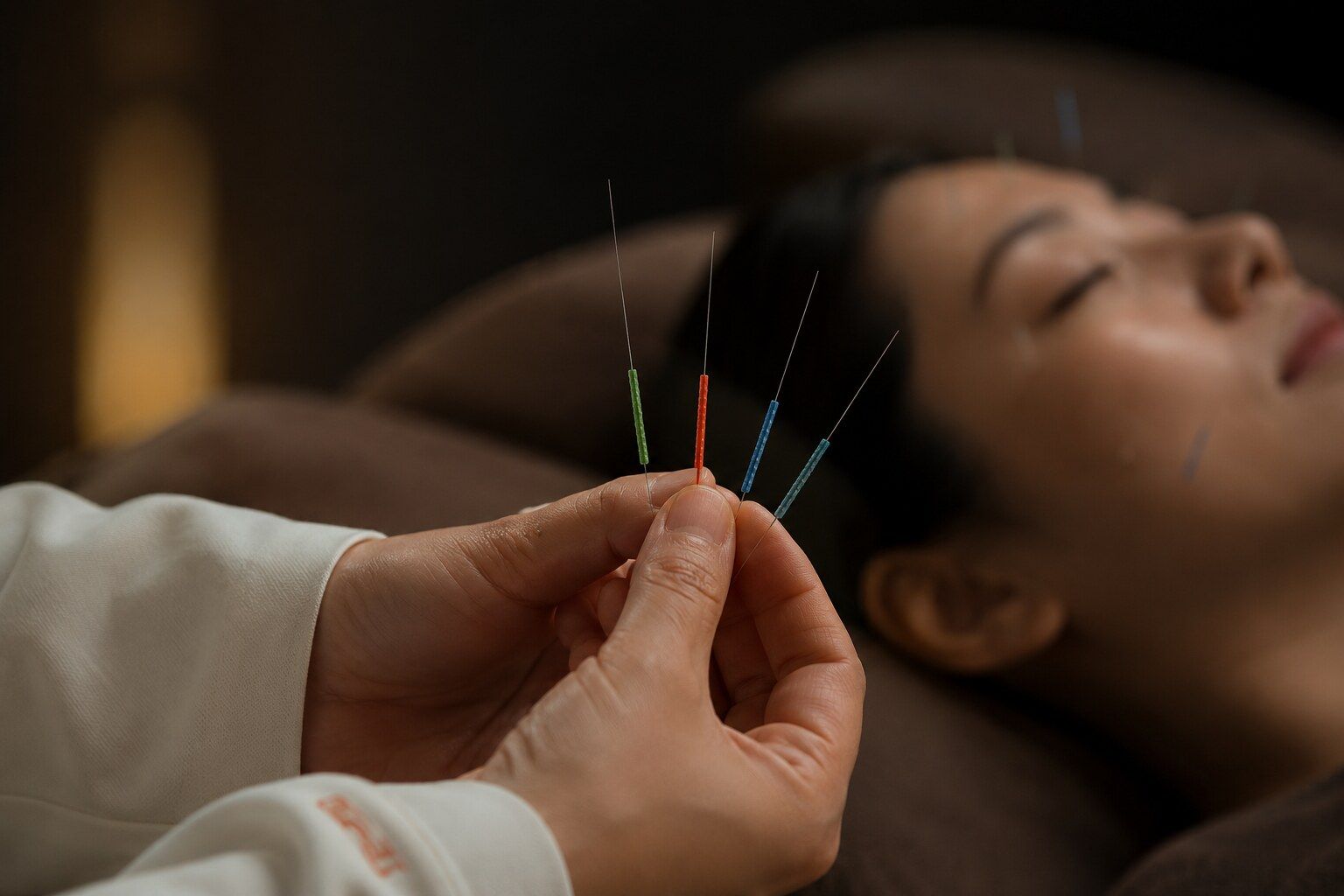
Most people describe facial acupuncture as a series of brief, fine sensations rather than continuous pain. Comfort, however, is personal—and good treatment should respond to what you actually feel.
What does it usually feel like?
You may feel a quick pinch on entry, pressure, tingling, warmth or a dull spreading sensation. Many points are barely noticed; others feel more distinct for a few seconds. The sensation should remain manageable.
Why are some facial areas more sensitive?
Areas with thinner tissue, dense sensory nerves, active inflammation or strong muscle tension may feel sharper. Sensitivity can also change with sleep, stress, the menstrual cycle, headache and recent dental or aesthetic treatment.
Needle size is only part of comfort
Facial needles are very fine, but comfort also depends on angle, depth, speed, tissue support and stimulation. A thoughtful technique follows anatomy instead of assuming every point should be treated the same way.
Anxiety can amplify sensation
Anticipation changes breathing and muscle tone, which can make a small sensation feel larger. Tell us if you are needle-sensitive or have fainted before. Starting slowly, lying comfortably and using fewer needles can make the first visit easier.
What should you tell your practitioner?
Speak up about sharp, burning, electrical or increasing pain. You never need to “endure” a needle to make treatment effective. A needle can be adjusted or removed without compromising the whole session.
Can a session be adapted?
Yes. We can modify the number of needles, sequence, stimulation, treatment time and manual preparation. For a first session, learning how your tissues and nervous system respond is more valuable than forcing a maximal protocol.
After the needles are removed
Minor point tenderness or muscle awareness may remain for a short time. Severe pain, progressive swelling, weakness or sensory change is not expected and should be reported promptly.
A calmer first appointment
Eat a light meal, hydrate normally, avoid rushing in, and share your concerns before treatment begins. Knowing that you remain in control often changes the experience more than trying to be “brave.”
Continue reading
Begin with an individual assessment
Every face has a different structure, treatment history and health context. A considered plan begins with understanding yours.
BOOK A CONSULTATIONMedical notice: This article is for health education only. It does not provide a diagnosis or replace individualized medical care. Results and appropriate treatment plans vary by person.