THE BEAUTY BIBLE · FACIAL ACUPUNCTURE FAQ
Facial acupuncture is not simply a collection of needles placed in the face. A thoughtful treatment begins with health history, facial anatomy, muscle and fascial tension, swelling, previous procedures and the changes a person actually hopes to understand.
What is facial acupuncture?
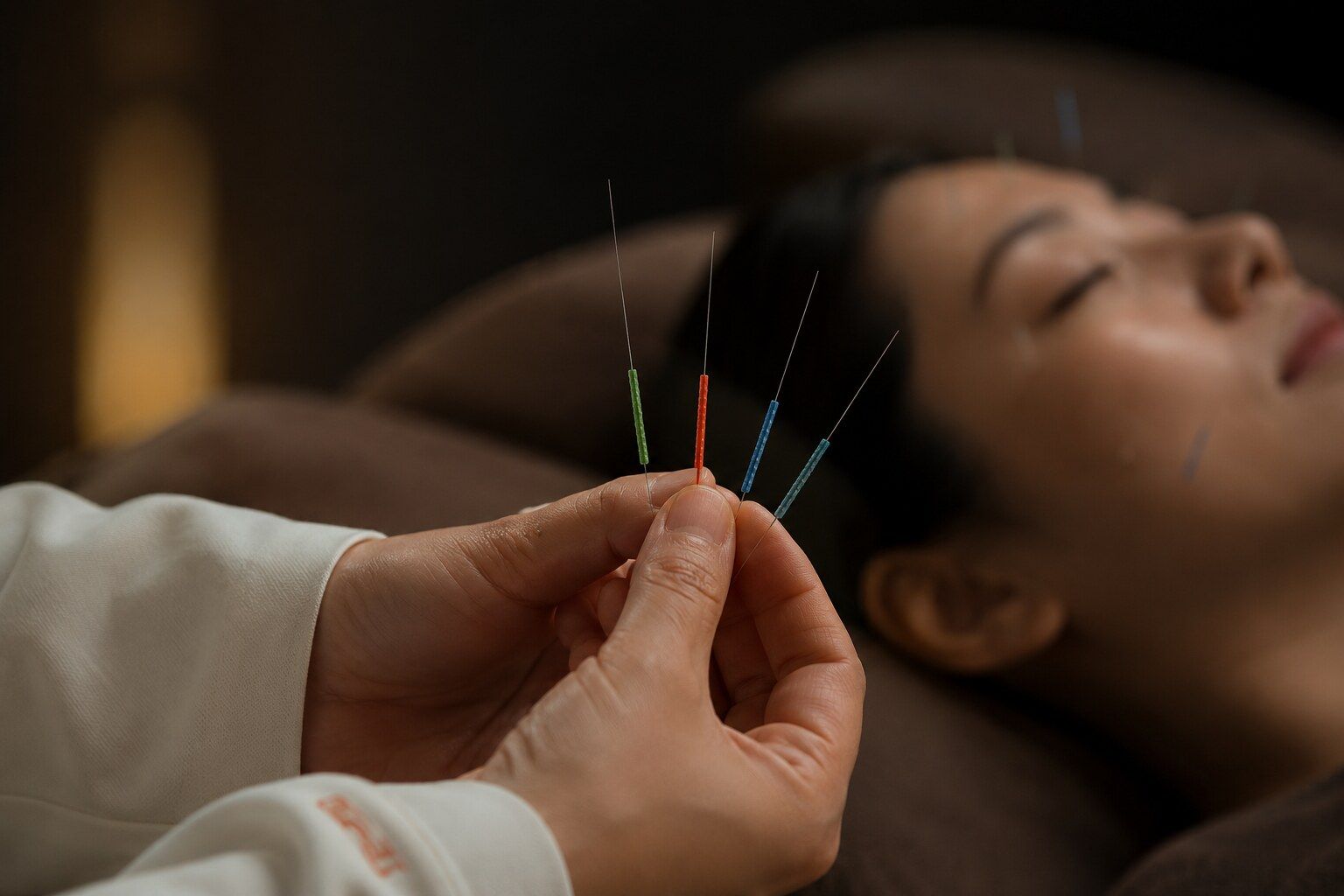
Facial acupuncture is an acupuncture-based clinical treatment using very fine, sterile, single-use needles on the face and, when appropriate, related areas of the scalp or body. The term describes a broad field rather than one universal protocol: assessment, point selection, needle depth, sequence and goals can differ considerably between practitioners.
At Dingyan Taipei, the aim is not to copy the effect of an injectable treatment. We first ask why a face appears tired, tense, swollen, asymmetrical or less supported, then decide whether acupuncture is appropriate within a wider clinical plan.
How does facial acupuncture work?
The face is shaped by more than skin. Bone support, fat compartments, muscle activity, fascial glide, lymphatic load, circulation, posture and habitual expression all contribute to what we see. Fine-needle stimulation may be used to address selected tension and circulation patterns, but it cannot create the same degree or mechanism of change as surgery, fillers, neuromodulators or energy-based devices.

The Dingyan Method: more than facial needling
The Dingyan Method reads a face through five connected dimensions: layers, tension, volume, glide and circulation. This framework helps distinguish a concern that may look similar on the surface but arise from a different combination of structures underneath.
Who may consider an assessment?
People commonly ask about facial acupuncture for tension-related expression lines, puffiness, a tired appearance, changes in contour, jaw clenching or facial asymmetry. Suitability cannot be decided by appearance alone. Medications, bleeding risk, pregnancy, active infection, recent procedures, neurological symptoms and other medical factors must be reviewed first.
What happens during a complete Dingyan visit?
A full visit may include consultation, facial and postural assessment, cleansing, manual relaxation or lymphatic preparation when appropriate, individualized acupuncture, calming care and aftercare guidance. The sequence is designed to be clinically coherent, not merely luxurious.
A simplified facial-needling service elsewhere may be shorter or have different goals. When comparing clinics, ask who performs the procedure, what is assessed, what sterile technique is used, and how previous aesthetic procedures are considered.
When can changes be observed?
Some people notice a temporary sense of relaxation, reduced tightness or a fresher appearance after one visit. Longer-term changes depend on the concern, tissue condition, daily tension patterns and treatment consistency. No responsible clinician can guarantee a specific lift, wrinkle reduction or duration.
Safety and preparation
Do not arrive fasting. Share your health history, medications, pregnancy status, bruising tendency and recent injections, laser, ultrasound, radiofrequency or thread procedures. Treatment should be performed only by a qualified practitioner using sterile single-use needles.
Frequently asked questions
Does facial acupuncture hurt?
Sensation varies by location and individual sensitivity. Fine needles are used, but some points may feel sharper when a person is anxious, tired or holding considerable facial tension.
How often should it be done?
Frequency should follow the assessment, goals and response—not a universal package. An initial series may be closer together, followed by a maintenance rhythm when appropriate.
Can it be combined with aesthetic procedures?
Sometimes, but timing matters. The clinician needs to know exactly what was performed, where and when before planning treatment.
Continue reading
Begin with an individual assessment
Every face has a different structure, treatment history and health context. A considered plan begins with understanding yours.
BOOK A CONSULTATIONMedical notice: This article is for health education only. It does not provide a diagnosis or replace individualized medical care. Results and appropriate treatment plans vary by person.