DINGYAN BEAUTY BIBLE · HIGH CHEEKBONES
When assessing high cheekbones, are the surrounding muscles and their connections above and below the only things we can address?
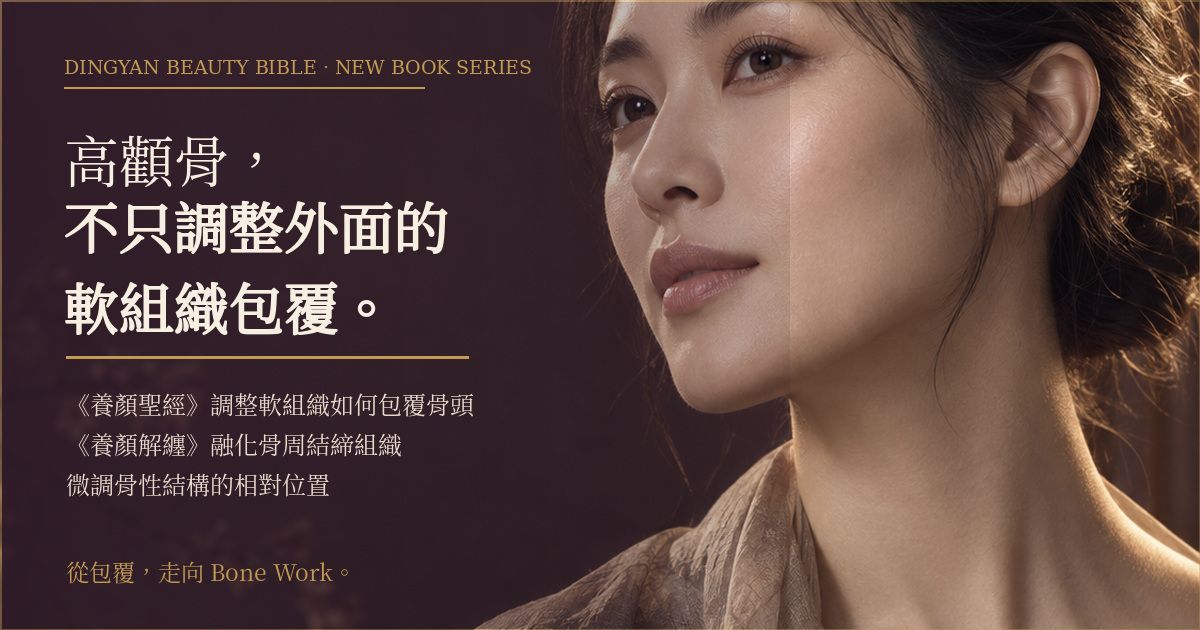
High cheekbones can be considered at two levels. The first examines how muscles and soft tissue cover the underlying bony contour. The deeper level, described in Dr. Mandy Lin's clinical framework, addresses tension and restricted glide in the connective tissue around bone, with the aim of allowing a more appropriate relative relationship within the structure's existing small range of movement. Clinical observations focus on subtle changes in perceived cheekbone height, symmetry, support and the way light falls across the face.
In the clinic, I look beyond the highest point of the cheekbone. I trace the contour from the temples and under-eye area through the cheeks to the jaw.
Why can cheekbones of similar height look softly sculpted on one person and sharp or abrupt on another? In addition to how soft tissue covers the bone, the answer involves the tightness and resistance of the connective tissue around it, and the direction of pull. This extends the assessment of facial muscles and fascia to the tissues surrounding the bony framework.
Why can equally high cheekbones create different impressions?
Perceived cheekbone height is not determined by the highest bony point alone. Hollow temples, support beneath the eyes, tightness along the outer cheek and the transition from the cheek to the jaw all change how light meets the face.
When these contours connect smoothly, high cheekbones can convey definition and vitality. Persistent tightness or restricted glide may interrupt those transitions, making the cheekbones appear sharper or uneven and deepening the appearance of a malar groove or midface line.
From The Beauty Bible to Unwind Beauty: two generations of thinking
FIRST GENERATION
The Beauty Bible: soft-tissue coverage
The first-generation framework focuses on how muscles and soft tissue cover the bony contour, and how the muscles beside, above and below it coordinate. Adjusting these relationships aims to create smoother transitions between the temples, under-eye area, cheekbones and jaw.
SECOND GENERATION
Unwind Beauty: connective tissue around bone
The second-generation framework looks more deeply at tightness, resistance to glide and pulling forces around bone. Dr. Lin describes releasing long-standing restraining tension to support more appropriate relative positioning within the structure's existing small range of movement.
What does “melting the connective tissue around bone” mean?
In the clinical language of Unwind Beauty, “melting” describes a change in tissue quality felt during palpation and treatment.
With an appropriate direction, depth and duration, tissue that initially feels firm, rigid or fixed may become softer; relative glide between layers and the distribution of tension may change. The term describes a shift from fixation toward adaptability, not literal chemical dissolution.
For prominent cheekbones, this means examining persistent pulling forces and the mechanical relationships between the cheekbones, temples, under-eye area, upper jaw and lower jaw, rather than simply pressing the surface flat.
The shape of a bone is one consideration. The forces acting around it and its relative relationships are another.
What is meant by fine adjustment of relative bony relationships?
Within Dr. Lin's clinical framework, this refers to reducing unnecessary fixation and pulling around a stable adult bony structure, while considering its subtle joint and sutural relationships and surrounding tissue tension. The intended adjustment stays within the existing small range of movement; it is not a claim that bone is dissolved or surgically reshaped.
Clinical observation considers perceived height, left–right relationships, support and small changes in contour and shadow, alongside facial asymmetry and facial support and sagging.
How are high cheekbones assessed in the clinic?
- Is the transition from temple to cheekbone continuous?
- Do the under-eye area and cheeks provide support around the cheekbone?
- Do different directions of tension affect perceived height on the two sides?
- Does the outer cheek habitually overwork during chewing, speaking or smiling?
- Do the tissues around bone feel soft and mobile, or tight, resistant and fixed?
When you next look in the mirror, follow the temples, under-eye area, cheekbones and jaw instead of focusing only on the highest point. A striking contour may reflect the bone itself, persistent surrounding tension, or both.
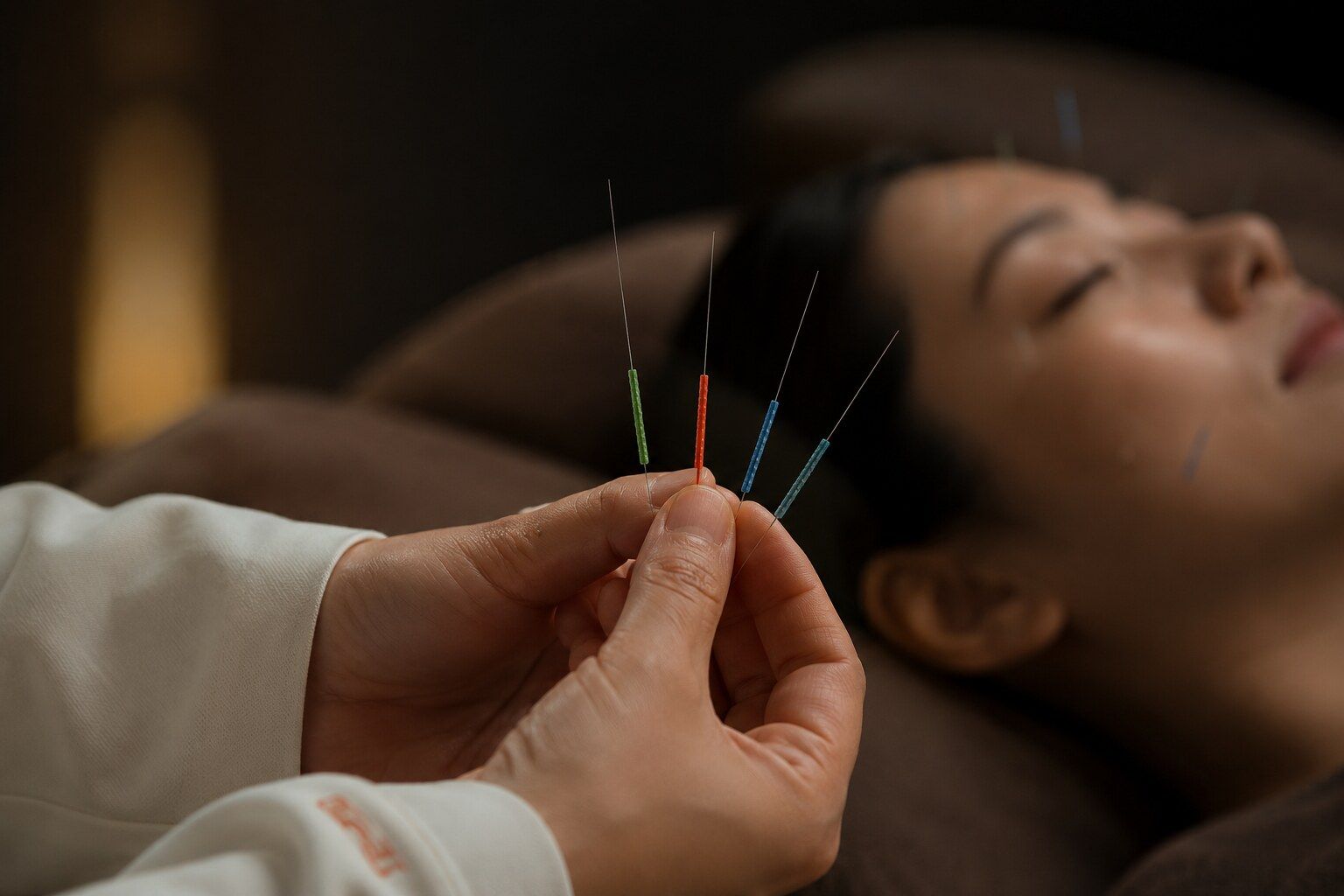
Dingyan's facial acupuncture assessment brings static contours, expression, soft-tissue coverage and deeper connective tissue into one clinical picture before selecting the appropriate level of intervention.
Frequently Asked Questions
Can someone with high cheekbones have facial acupuncture?
Yes, following assessment. The clinician distinguishes the contribution of the bony framework, soft-tissue coverage, left–right tension and connective tissue around bone before planning acupuncture and manual techniques.
Do high cheekbones always mean the bones protrude too much?
No. The temples, under-eye area, cheeks, jaw support, soft-tissue coverage and transitions in light and shadow all influence their apparent height and sharpness.
Does “melting connective tissue” mean dissolving it?
No. Dr. Mandy Lin uses the term to describe a tactile change from firm, fixed tissue toward softness, glide and a more adaptable distribution of tension.
Can Bone Work move bones?
Dingyan Bone Work is described as addressing restraining tension around bone within its existing small range of movement. The clinical focus is subtle changes in perceived height, symmetry, support and contour, rather than reshaping bone.
How do the two books differ?
The Beauty Bible develops the first-generation framework of muscles, fascia and soft-tissue coverage. Unwind Beauty extends it to tightness, resistance, glide and pulling forces in connective tissue around the bony framework.
From soft-tissue coverage to a deeper clinical perspective
The Chinese edition, 《養顏解纏》, and the English edition, Unwind Beauty, are scheduled for simultaneous release in November 2026. Follow Dingyan and Yanlili for publication updates.
Visit the official Yanlili book pageBy Dr. Mandy Lin · Founder of Dingyan · Dingyan Method
Chinese source: 2026-09-11 · Translation published September 19, 2026.